
Australia's Bushfire Treatment Gap — A Structural Challenge, Not a Failure of Effort
Australia's fire agencies are doing critical work in difficult conditions, but the scale of the treatment challenge is outpacing the tools available. Here's what's driving the gap and what it will take to close it.
Clinton Neumann
Managing Director, BurnBot Australia
Australia's fire agencies and land managers do extraordinary work. Every burn season, dedicated crews plan and execute hazard reduction operations across complex terrain, navigating tight weather windows, competing land-use demands, and public scrutiny. The professionalism and commitment of the people doing this work is not in question.
What is in question is whether the current set of tools, funding, and operational capacity can keep pace with the scale of the challenge. Every state and territory sets annual targets for hazard reduction burning, and despite genuine effort, most consistently fall short — not through lack of will, but because the constraints are structural. The gap between what needs to be treated and what can be treated with current methods is widening, and the consequences compound year on year.
The Numbers Tell the Story
The 2019–20 Black Summer laid bare the scale of the challenge: more than 24 million hectares burned, three billion animals were impacted, thirty-three people lost their lives, and the economic cost exceeded $100 billion. The inquiries that followed didn't blame the agencies on the front line — they recognised that the system as a whole wasn't resourced to match the growing risk.
The numbers reflect a structural reality, not a performance failure. Estimates suggest that planned burning consistently reaches only a fraction of annual targets — in some states, as little as 20% of the land that should be treated receives treatment in any given year. Agencies know this better than anyone. The people writing those burn plans understand exactly how much is being left undone, and the frustration of watching targets go unmet despite their best efforts.
Why the Gap Exists
Fire managers across Australia face a set of constraints that are genuinely difficult to overcome — not because of poor planning, but because the operating environment is unforgiving. These constraints compound against each other, making it structurally hard to scale planned burning with current tools and resources.
Narrow Burn Windows
Traditional planned burning requires specific weather conditions — the right combination of temperature, humidity, wind speed, and soil moisture. In many parts of Australia, these conditions align for only a few weeks per year. A single week of unfavourable weather during the burn window can wipe out a significant portion of the season's planned treatment.
Crew Availability and Safety
Planned burning is labour-intensive. It requires trained crews, equipment, and supervision. Many of the areas that most need treatment — steep terrain, remote bushland, rugged escarpments — are the hardest and most dangerous places for crews to work. When the risk to crew safety is too high, burns are postponed or cancelled.
Smoke Management
Communities near planned burn areas are increasingly sensitive to smoke impacts — and rightly so. Smoke management constraints limit when and where burns can occur, particularly near urban areas and the bushfire interface zones that arguably need treatment most. Achieving fuel reduction while managing smoke impact is one of the defining tensions in Australian fire management.
Regulatory Complexity
Burn planning, environmental approvals, cultural heritage assessments, neighbour notification, and multi-agency coordination all take time. The administrative burden of organising a planned burn is substantial, and it scales with the size and complexity of the operation. Streamlining these processes without compromising their purpose is an ongoing challenge.
The Compounding Risk
When fuel loads go untreated, they don't reset. They accumulate. Each year of under-treatment adds to the total fuel load on the landscape, increasing the intensity and severity of fires when they inevitably occur. This is well understood by every fire agency in the country — it's not a knowledge gap, it's a capacity gap.
Land managers face an increasingly difficult cycle: as fuel loads increase, the risk and complexity of conducting planned burns also increases. Burns become harder to control safely, the consequences of escape grow more severe, and the margin for error narrows. Agencies are being asked to do more with the same tools in conditions that are getting harder every year.
Climate change compounds the pressure. Hotter, drier conditions shrink burn windows, increase fire intensity, and extend fire seasons. The agencies on the front line of this challenge are adapting as fast as they can — but adapting within the same operational constraints that created the gap in the first place.
What Would It Take to Close the Gap?
Closing Australia's bushfire treatment gap requires action on multiple fronts. There is no single solution, but the levers are clear.
- Expanding the burn window — technology that enables planned burning in a wider range of conditions, including at night, in higher humidity, and in weather that would ground traditional operations.
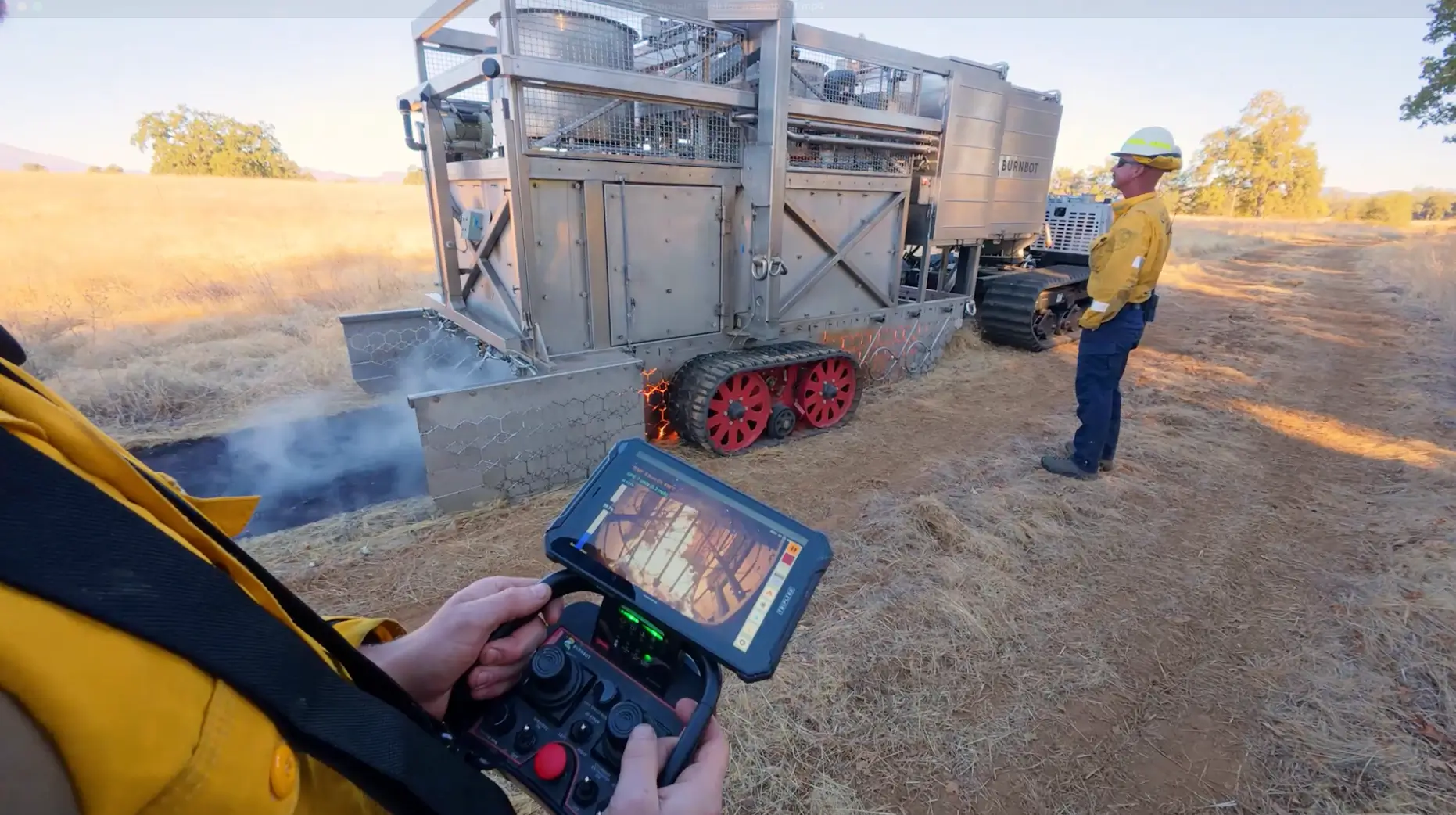
- Reducing crew exposure — remote-controlled systems that can operate in steep, hazardous terrain without putting people at risk, enabling treatment of areas that are currently inaccessible.
- Complementing fire with mechanical treatment — mechanised fuel reduction for areas where burning isn't feasible due to smoke constraints, proximity to assets, or ecological sensitivity.
- Investing in capacity — more trained crews, more equipment, and more funding allocated to prevention rather than suppression.
- Streamlining planning and approvals — reducing the administrative burden of organising planned burns without compromising environmental or cultural safeguards.
- Better data and reporting — real-time monitoring and treatment mapping that gives land managers confidence in outcomes and supports compliance reporting.
Some of these levers are policy decisions. Some are funding decisions. And some are technology decisions — areas where purpose-built tools can materially change what's possible on the ground.
An Industry Challenge, Not a Single Company's Problem
The treatment gap won't be closed by any one organisation, technology, or approach. It requires coordination across government, industry, communities, and Traditional Owners. It requires sustained investment in both capability and capacity. And it requires new tools that give the experienced professionals already doing this work more options in the field.
At BurnBot Australia, we see our role as supporting the people who already understand this challenge best. Australia's fire agencies and land managers have the knowledge, the relationships, and the operational discipline. What they need are tools that extend their reach — more terrain treated, in more conditions, with less risk to their crews. That's what we're here to provide, working alongside the agencies and operators who set the direction.
We'll be exploring these themes in more depth in future articles — diving into specific aspects of the treatment gap, the role of technology, and the conversations happening across the industry about how to build a more resilient Australia.